Shukla Paksha – When Darkness Turns Into Light
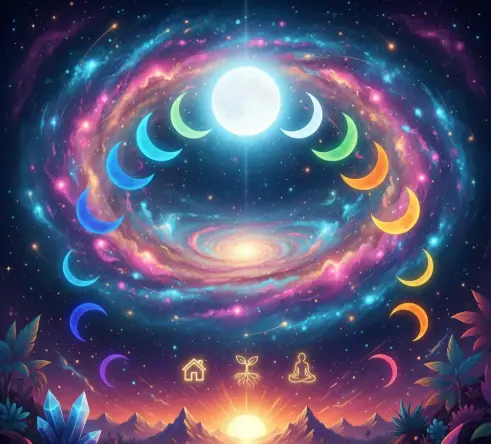
Welcome back to the Tatvamaya™ Series – Time & Cosmic Cycles.
This journey opens a small doorway to deeper wisdom. Today, as we step through it together, we explore the gentle shift that begins right after Amavasya, when a faint sliver of the Moon appears and grows a little brighter each night, the sky slowly awakens. This graceful journey from darkness into light is what our ancestors lovingly called Shukla Paksha.
🌕 What Is Shukla Paksha?
Shukla Paksha is the bright half of the lunar month.
It begins the day after Amavasya and ends on Purnima.
During these 14-15 days:
- the visible part of the Moon increases
- energy is believed to rise
- life naturally moves towards freshness and clarity
Meaning
- Shukla = bright, pure, uplifting
- Paksha = phase
So it means “the bright, rising phase of the month.”
🌙 Why the Moon Grows
As the Moon moves around Earth, we see more of the sunlit side each day.
Our ancients beautifully observed: “When the Moon grows, the mind grows.”
📜 Scriptural Mentions
Shukla Paksha is well-established in Hindu texts:
- Rig Veda & Yajur Veda mention the two divisions: Shukla and Krishna.
- Taittiriya Samhita highlights rituals aligned with the waxing Moon.
- Bhagavata Purana (5.21) explains how the Moon’s increasing light nourishes life.
- Surya Siddhanta describes the brightening cycle of the Moon.
🌱 Why This Phase Is Important Auspicious for New Beginnings
Traditionally preferred for:
- new projects
- marriages
- housewarming
- travel
- important decisions
Supportive for Spiritual Growth
The rising light helps with:
- learning
- mantra japa
- devotion
- meditation
- community activities
🎉 Festivals in Shukla Paksha
Many major celebrations occur during this brightening phase:
- Navratri
- Guru Purnima
- Ganesh Chaturthi
- Holi
- Vaikunta Ekadashi
All reflect the theme of growth and upliftment.
✨ Tatvamaya™ Insight
Shukla Paksha teaches us that even a small light, when nurtured daily, becomes a full Moon-outside and within.